

How To Increase The Accuracy Of Stepper Motor
Jan 24, 2024
Stepper motors are widely used in various applications, such as CNC machines, 3D printers, robotics, and automation systems, due to their precise control and ability to move in discrete steps. However, achieving high accuracy with stepper motors can be challenging, as factors like resonance, vibration, and step resolution can affect performance. This article explores several strategies and techniques to enhance the accuracy of stepper motors, ensuring optimal performance in diverse applications.
1. Microstepping Technology
Microstepping is a technique that allows stepper motors to move between full steps by dividing each step into smaller microsteps. This results in smoother motion, reduced vibration, and improved accuracy. Traditional stepper motors operate in full steps, where each step corresponds to a fixed angular displacement. Microstepping, on the other hand, allows for finer control and more precise positioning by interpolating between these full steps. Implementing microstepping drivers in the control system significantly enhances the motor's accuracy and reduces the likelihood of resonance-related issues.
2. Resonance Damping
Resonance occurs when the natural frequency of the motor coincides with an external force or disturbance, leading to unwanted vibrations and reduced accuracy. To mitigate resonance, engineers can employ various techniques such as adding damping materials, adjusting load distribution, or implementing resonance-damping algorithms in the motor control system. By identifying and addressing resonance issues, the stepper motor's accuracy can be significantly improved, ensuring stable and precise operation.
3. Advanced Control Algorithms
Implementing sophisticated control algorithms can greatly enhance the accuracy of stepper motors. Closed-loop control systems, which incorporate feedback mechanisms like encoders or sensors, enable real-time adjustments to the motor's position. These systems can detect errors and correct them immediately, compensating for factors like load variations and disturbances. Closed-loop control not only improves accuracy but also provides better torque performance and responsiveness.
Accurate Current Control
Proper current control is crucial for stepper motor accuracy. In many applications, the current supplied to the motor coils determines the torque and, consequently, the motor's ability to overcome loads. Accurate current control helps prevent issues such as motor overheating and improves efficiency. Advanced current control techniques, such as adaptive current control and dynamic current adjustment, contribute to increased accuracy by optimizing the motor's performance under varying conditions.
Mechanical Considerations
The mechanical components surrounding the stepper motor play a vital role in its overall accuracy. Proper alignment of the motor shaft, minimizing backlash in gears and couplings, and ensuring precise mechanical construction contribute to improved accuracy. Additionally, selecting the appropriate gearbox or gear reduction mechanism can enhance the motor's ability to provide high torque and accuracy in applications where finer resolution is required.
Thermal Management
Heat can adversely affect the performance of stepper motors, leading to reduced accuracy and potential damage. Efficient thermal management is essential to maintain optimal operating temperatures. Heat sinks, cooling fans, or even active cooling systems can be employed to dissipate heat generated during motor operation. Keeping the motor within its specified temperature range ensures stable performance and extends its operational life.
High-Resolution Encoders
In applications demanding exceptionally high accuracy, incorporating high-resolution encoders with stepper motors becomes imperative. These encoders provide feedback on the motor's actual position, enabling precise control and correction of any discrepancies. High-resolution encoders are particularly beneficial in applications where the load or environmental conditions may vary, ensuring accurate positioning even under challenging circumstances.
Torque and Inertia Matching
Mismatch between the motor's torque and the load's requirements can lead to inaccuracies and missed steps. Properly matching the stepper motor's torque and inertia to the application's demands is crucial for achieving optimal accuracy. Oversized motors may lead to increased energy consumption and reduced efficiency, while undersized motors may struggle to meet the load requirements. Careful consideration of the torque and inertia characteristics during the motor selection process is essential for maximizing accuracy.
Enhancing the accuracy of stepper motors involves a comprehensive approach that addresses both electronic and mechanical aspects. By implementing these strategies and techniques, stepper motors can deliver the precision required for a wide range of applications, ultimately contributing to the efficiency and reliability of automated systems in various industries.
You Might Also Like
-

NEMA 17 Bipolar 1.8deg 0.65Nm 4V 1.5A 42x42x60mm 4 Wires ...
-
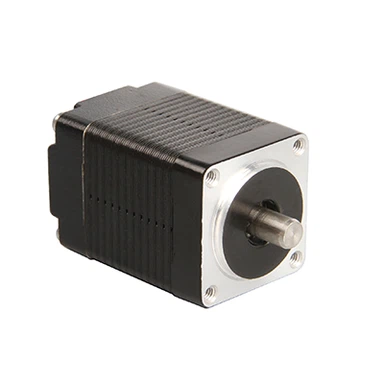
NEMA 8 Bipolar 1.8deg 0.048Nm (6.7oz.in) 0.6A 8.1V 20x20x...
-

NEMA 23 Bipolar 0.9deg 1.7Nm(236oz.in) 2.8A 3.2V 57x57x76...
-
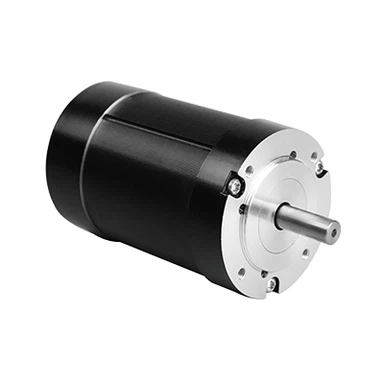
24V 1600RPM 0.418Nm 70W 4.2A Ф57x90mm Brushless DC Motor
-
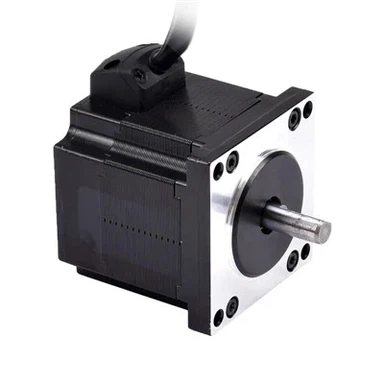
24V 4000RPM 0.29Nm 120W 6.90A 57x57x82.5mm Brushless DC M...
-
NEMA 8 Bipolar 1.8deg 0.013Nm(1.8oz.in) 0.2A 4.8V 20x20x2...