
Understanding Dual Shaft Stepper Motors: Key Features And Applications
Dec 06, 2024
Stepper motors are widely recognized for their precision and ability to move in discrete steps, making them essential in a variety of automation and control applications. While standard stepper motors are commonly used in a range of industries, the dual shaft stepper motor provides additional flexibility and utility. But what exactly sets dual shaft stepper motors apart, and why should engineers and designers consider using them in their projects?
What is a Dual Shaft Stepper Motor?
A dual shaft stepper motor, as the name suggests, is a stepper motor that features two shafts - one at each end of the motor. These shafts can rotate independently of each other, providing versatility in systems that require multiple drive outputs or where space constraints dictate the need for multiple connections.
The two shafts can either rotate in the same direction or in opposite directions, depending on the design of the system and the motor's configuration. This feature makes dual shaft stepper motors highly useful in applications that require simultaneous operation of two separate devices or systems, particularly in situations where space and the number of available motor mounts are limited.
Key Features of Dual Shaft Stepper Motors
Dual-Output Capability: One of the standout features of dual shaft stepper motors is their ability to drive two separate systems with a single motor. This dual-output functionality eliminates the need for multiple motors, saving space and reducing the complexity of the design. It's particularly useful in applications where multiple movements need to be controlled independently but from a single power source.
Space-Saving Design: Despite having two shafts, dual shaft stepper motors are designed to be compact, offering efficiency without taking up extra space. This makes them ideal for applications with strict space constraints, such as robotics, medical devices, and compact machinery, where every inch of space matters.
Accurate Positioning: Like all stepper motors, dual shaft stepper motors provide precise control over movement. Their step-by-step rotational motion ensures high accuracy in positioning, making them suitable for systems requiring exact movements, such as 3D printers or CNC machines.
Versatile Bidirectional Rotation: Dual shaft stepper motors offer the flexibility of bidirectional rotation, with each shaft capable of rotating in different directions. This capability is particularly valuable in applications that require simultaneous opposite rotational motions, such as conveyor systems or dual-axis machinery.
High Torque and Efficiency: Dual shaft stepper motors are capable of delivering high torque even at low speeds, which makes them ideal for continuous or heavy-duty applications. Their ability to maintain efficient operation while providing reliable performance at lower speeds ensures they're well-suited for tasks that demand sustained motion without compromising power or efficiency.
Applications of Dual Shaft Stepper Motors
Dual shaft stepper motors are highly versatile and find application across various industries thanks to their ability to drive multiple mechanisms simultaneously. Here are some common uses:
1. Robotics
In robotics, dual shaft stepper motors are used to control both the arm and wrist movements. One shaft can drive the rotation of the arm, while the other controls the wrist's position. This capability enables complex, synchronized movements without requiring multiple motors, enhancing both design efficiency and precision.
2. Medical Equipment
In medical devices, where accuracy is critical, dual shaft stepper motors are often utilized. They are used in imaging machines, syringe pumps, and prosthetic limbs, where precise and reliable motion is required. The dual shafts allow for the control of multiple components within a single motor, helping to reduce the overall size of the device and simplify the design.
3. 3D Printers
Dual shaft stepper motors are commonly employed in 3D printers to control both the extruder and the movement of the print bed. This ensures smoother, coordinated motion, enabling intricate and precise printing operations. By using one motor to handle multiple functions, the system becomes more efficient and compact.
4. CNC Machines
In CNC (Computer Numerical Control) machines, dual shaft steper motors are used to control different axes of motion. One shaft can manage the vertical movement, while the other controls horizontal movemenpt. This dual-axis control contributes to higher precision and smoother operation, essential in machining processes that require fine tolerances.
5. Automated Manufacturing Systems
In automated assembly lines, dual shaft stepper motors are ideal for driving multiple functions at once. For example, one shaft can power conveyor belts, while the other controls the motion of robotic arms or sorting mechanisms, optimizing the manufacturing process.
6. Stage Lighting and Audio Equipment
Dual shaft stepper motors are also widely used in stage lighting systems. They allow both the rotation and positioning of lighting rigs to be controlled by a single motor, leading to more compact, efficient designs for entertainment and stage production systems.
Conclusion
Dual shaft stepper motors offer an elegant solution to many complex design challenges. Their ability to drive multiple outputs from a single motor while maintaining precision and efficiency makes them indispensable in a wide range of applications, from robotics to medical equipment and manufacturing automation.
You Might Also Like
-
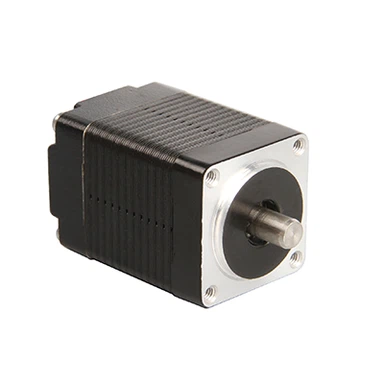
NEMA 8 Bipolar 1.8deg 0.048Nm (6.7oz.in) 0.6A 8.1V 20x20x...
-
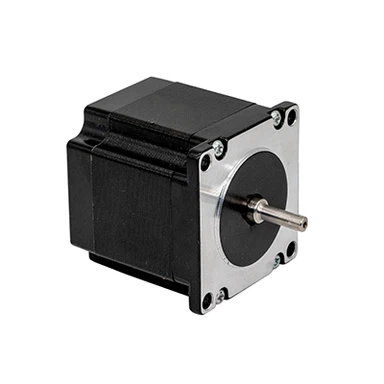
NEMA 23 Unipolar 1.8deg 0.39Nm (54oz.in) 57x57x41mm 6 Wir...
-

Round NEMA 23 Bipolar 1.8deg 0.65Nm (90.3oz.in) 2.8A 2.4V...
-
40×40mm 50w 3000rpm 0.16Nm 24VDC Servo Motor
-
NEMA 11 Bipolar 1.8deg 0.12Nm (16.7oz.in) 0.67A 6.2V 28x2...
-

NEMA34 Geared Stepper Motor