

BLDC Vs Servo Motors: How To Choose
Sep 26, 2025
BLDC vs Servo Motors: How to Choose
Introduction
In industrial automation and robotics, buyers often compare BLDC (Brushless DC) motors and servo motors. Both offer high performance, but their features, cost, and applications differ. Choosing the right motor depends on your project's precision, speed, and budget requirements.
What Is a BLDC Motor?
A Brushless DC motor uses electronic commutation instead of brushes.
Key features:
High efficiency
Long lifespan (no brush wear)
Compact design
Quiet operation
What Is a Servo Motor?
A servo motor is a closed-loop system that combines a motor, sensor, and controller to achieve precise position and speed control.
Key features:
Excellent accuracy
High torque at low speeds
Feedback system for stable control
Suitable for complex motion tasks
BLDC vs Servo Motors: Key Differences
| Feature | BLDC Motor | Servo Motor |
|---|---|---|
| Control System | Open-loop or simple closed-loop | Closed-loop with feedback |
| Precision | Moderate (good for speed control) | High (ideal for positioning) |
| Cost | Lower, cost-effective | Higher due to feedback system |
| Maintenance | Very low | Low to medium (depends on system) |
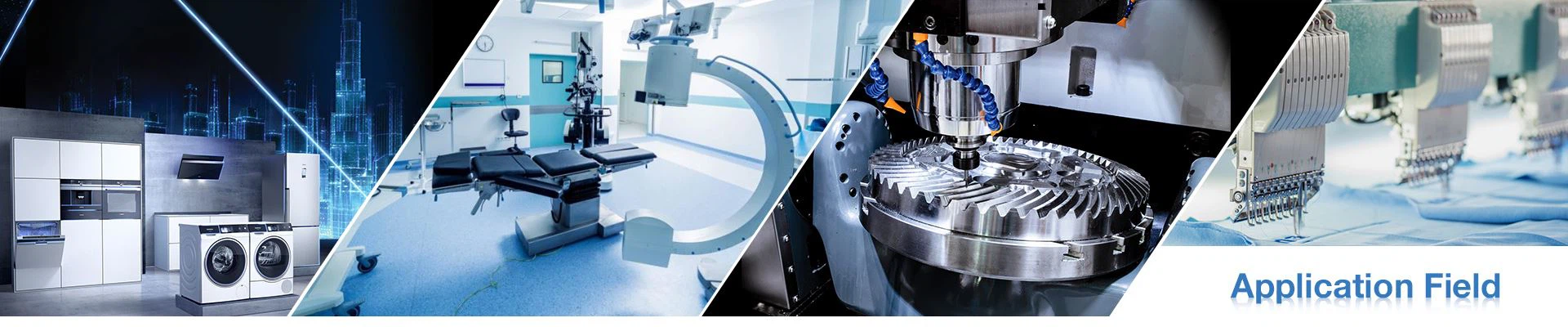
| Applications | Fans, pumps, logistics, tools | Robotics, CNC, automation, medical |
How to Choose the Right Motor
Choose BLDC if your project requires energy efficiency, continuous rotation, or cost control.
Choose Servo if you need high precision, dynamic response, or heavy-duty positioning tasks.
Typical Applications
BLDC Motors: Electric vehicles, smart logistics conveyors, drones, pumps.
Servo Motors: Industrial robots, CNC machining centers, packaging machines, medical automation.
BLDC motors and servo motors both play critical roles in modern industry. For buyers, the decision comes down to balancing performance, cost, and application needs. Understanding these differences helps ensure smarter procurement and better system performance.
You Might Also Like
-

NEMA 17 Bipolar 1.8deg 0.4Nm 1.2A 2.8V 42x42x39mm Stepper...
-

NEMA 17 Bipolar 1.8deg 0.15Nm 1A 3.7V 42x42x20.5mm 4Wire ...
-

NEMA 16 Bipolar 0.9deg 0.17Nm (23.6oz.in) 0.4A 12V 39x39x...
-

36V 4000RPM 0.116Nm 50W 2.3A Ф57x50mm Brushless DC Motor
-
40×40mm 50w 3000rpm 0.16Nm 24VDC Servo Motor
-

NEMA 24 Triphase 1.2deg 0.6Nm (83oz.in) 1.5A 9.45V 60x60x...