

Stepper Motor Basics And Applications
Sep 25, 2025
Stepper Motor Basics and Applications
Introduction
Stepper motors are widely used in industrial automation, robotics, medical devices, and precision equipment. Their ability to provide accurate position control without feedback systems makes them a popular choice for manufacturers and engineers worldwide. In this article, we will explain what a stepper motor is, how it works, and where it is commonly applied.
What Is a Stepper Motor?
A stepper motor is an electromechanical device that converts electrical pulses into discrete mechanical steps. Unlike traditional motors, which rotate continuously, a stepper motor moves in fixed angles (steps). This feature allows precise control of rotation, speed, and position.
Key features of stepper motors include:
High precision in positioning
Excellent repeatability
Simple open-loop control system
Reliable performance with low maintenance
How Does a Stepper Motor Work?
The motor consists of a rotor (the moving part) and a stator (the stationary part with coils). When electrical pulses are sent to the coils, magnetic fields are created, causing the rotor to move step by step. By adjusting the pulse frequency, engineers can easily control the motor's speed and acceleration.
Types of Stepper Motors
Permanent Magnet Stepper – Low cost, suitable for simple applications.
Variable Reluctance Stepper – Basic design, used for low-torque systems.
Hybrid Stepper – Combines the advantages of both types, widely used in automation and CNC machines.
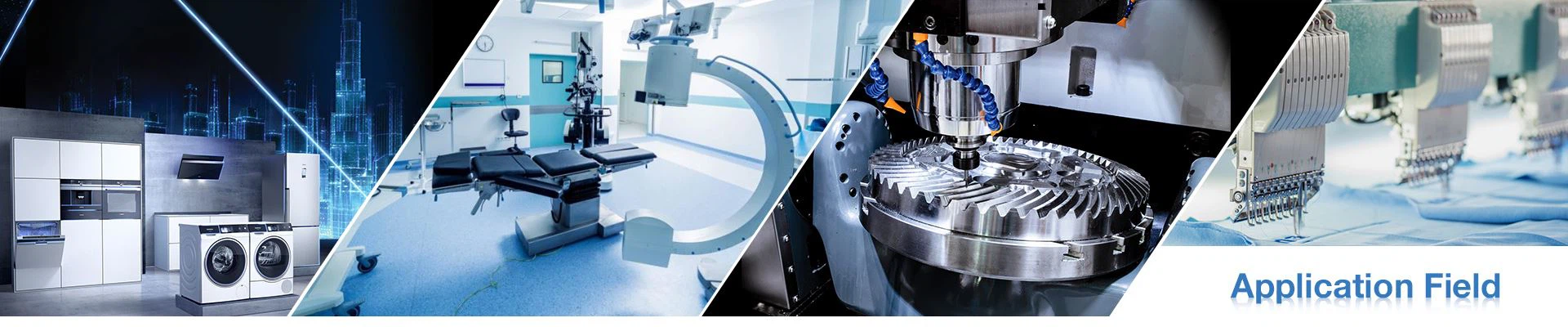
Applications of Stepper Motors
Stepper motors are used in a wide range of industries:
Industrial Automation: CNC machines, textile machinery, packaging equipment.
Medical Equipment: Blood analyzers, X-ray machines, infusion pumps.
Robotics: Robotic arms, 3D printers, pick-and-place machines.
Office and Consumer Devices: Printers, cameras, vending machines.
Why Buyers Choose Stepper Motors
Cost-effective solution for precise motion control
Easy integration with digital control systems
Reliable operation in demanding environments
Wide availability of sizes and torque ranges
Conclusion
Stepper motors play a crucial role in modern motion control systems. Whether for robotics, automation, or medical devices, their precision and reliability make them an ideal choice for global buyers. Understanding their basic principles and applications helps engineers and purchasing managers make smarter decisions when selecting motion components.
You Might Also Like
-

NEMA 17 Geared Stepper Motor With Brake
-

NEMA 17 Bipolar 1.8deg 0.16Nm 0.7A 3.1V 42x42x25mm Steppe...
-

NEMA 23 Bipolar 1.8deg 0.52Nm(72.2oz.in) 2.8A 2V 57x57x41...
-

NEMA 17 Bipolar 3.6deg 0.053Nm (7.4oz.in) 0.1A 9.8V 42x42...
-

130x130mm 2300w 1500rpm 14.64Nm 220VAC Servo Motor
-

48V 4000RPM 0.43Nm 180W 4.50A 57x57x120.5mm Brushless DC ...