

The Benefits Of Stepper Motors With Encoders
Nov 14, 2024
What is a Stepper Motor with an Encoder?
1. Improved Accuracy and Precision
One of the primary benefits of using stepper motors with encoders is enhanced accuracy and precision. In open-loop systems, stepper motors can occasionally skip steps due to overloads, friction, or changes in speed, leading to position errors. However, with an encoder, the system constantly monitors the motor's position and speed.
If the motor misses a step or loses synchronization, the encoder detects the error and sends the information back to the controller. The controller can then adjust the motor's operation to correct the issue and ensure that the motor returns to its precise position. This closed-loop feedback system results in more reliable and accurate motion control.
2. Real-Time Feedback and Error Correction
3. Smoother Motion and Reduced Vibration
In open-loop systems, stepper motors can sometimes experience jerky movements or vibrations, especially when operating at high speeds or under heavy loads. These vibrations can lead to inaccuracies, reduce the lifespan of components, or result in suboptimal performance.
With an encoder providing feedback, the controller can make adjustments to smooth out the motor's movement. It can fine-tune the current, speed, or torque applied to the motor, reducing jerky movements and vibrations. This leads to smoother operation, less mechanical stress, and a more stable system overall.
In applications such as 3D printing or precision machining, where smooth motion is vital for achieving high-quality results, stepper motors with encoders significantly improve performance.
4. Better Torque and Speed Control
One of the standout features of stepper motors with encoders is the ability to provide better torque and speed control. In a closed-loop system, the controller continuously adjusts the motor's power and speed based on the feedback received from the encoder.
This dynamic adjustment allows the motor to operate more efficiently, ensuring that it delivers the correct amount of torque even under varying loads or changing conditions. For instance, when a stepper motor encounters an increase in load, the encoder can help the controller ramp up the current to maintain torque, preventing stalling or losing position.
The ability to precisely control torque and speed also makes stepper motors with encoders ideal for high-performance applications, such as robotic arms, automated assembly lines, and precision manufacturing equipment.
5. Increased Efficiency and Energy Savings
In traditional stepper motors operating in open-loop control, the motor often operates at full current even when it's not required. This results in energy waste and excess heat generation. Stepper motors with encoders, however, allow for more efficient power use.
Because the encoder continuously provides feedback on the motor's position and load, the controller can adjust the motor's power usage to match the load more accurately. This results in less energy consumption, reduced heat generation, and greater overall efficiency.
For industries focused on reducing energy consumption and improving operational efficiency, stepper motors with encoders are a cost-effective solution.
6. Enhanced Reliability and Reduced Maintenance
With continuous feedback from the encoder, stepper motors can operate more reliably and with fewer errors. This helps to extend the lifespan of the motor and reduces the likelihood of mechanical failures. The system can also detect potential issues early on, allowing for preventative maintenance before problems occur.
In applications where downtime or failure is costly, the ability to monitor and correct issues in real-time is a significant advantage. Systems equipped with stepper motors and encoders require less maintenance, leading to fewer disruptions and longer service intervals.
7. Reduced Heat Generation
In open-loop systems, stepper motors are typically driven with a constant current, which can lead to significant heat buildup, especially during high-speed or high-torque operations. Excessive heat can damage the motor, reduce performance, and shorten its lifespan.
Stepper motors with encoders, operating in a closed-loop system, only use as much power as is necessary for the task at hand. The encoder allows the controller to adjust the current in real-time, reducing unnecessary power usage and, consequently, the amount of heat generated by the motor.
This makes stepper motors with encoders particularly useful in applications where heat management is critical, such as in high-speed machinery or precision equipment that needs to maintain optimal performance.
8. Easier Troubleshooting and Diagnostics
When a system uses stepper motors with encoders, the constant feedback makes it easier to troubleshoot and diagnose issues. If the motor starts skipping steps or behaves erratically, the encoder can pinpoint the exact moment the issue occurred and help the technician identify the root cause.
This level of diagnostic capability simplifies troubleshooting and ensures that any problems are addressed quickly, reducing downtime and improving overall system uptime.
Conclusion
Stepper motors with encoders provide a powerful combination of precise motion control and real-time feedback, making them an ideal choice for a wide range of applications. From improved accuracy and error correction to enhanced efficiency and reduced heat generation, the benefits of using stepper motors with encoders are clear.
Whether you're designing a CNC machine, building a robotic system, or improving the performance of a 3D printer, stepper motors with encoders provide the reliability, precision, and performance needed to ensure that your systems operate smoothly and efficiently. By integrating encoders into your stepper motor system, you can take your motion control to the next level.
You Might Also Like
-
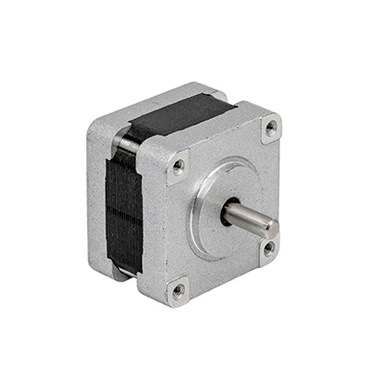
NEMA 16 Bipolar 1.8deg 0.13Nm (18.1oz.in) 0.5A 9V 39x39x2...
-

24V 4000RPM 0.215Nm 90W 4.92A 42x42x100mm Brushless DC Motor
-

24V 5000RPM 0.011Nm 6W 0.5A Ф30x41mm Brushless DC Motor
-

40x40mm 100w 3000rpm 0.32Nm 220VAC Servo Motor
-

80x80mm 750w 3000rpm 2.4Nm 220VAC Servo Motor
-

24V 2000RPM 0.062Nm 13W 0.91A Ф42x43mm Brushless DC Motor