


Planetary Reducers In Robotics: Enabling Precision And Power
Nov 06, 2024
Understanding Planetary Reducers
A planetary reducer is a type of gear mechanism used to reduce the speed of an input shaft while simultaneously increasing torque. The design of the planetary gear system consists of a central "sun" gear, which is surrounded by multiple "planet" gears. These planet gears revolve around the sun gear, and the motion is transferred to an outer "ring" gear. This configuration enables the transmission of high torque in a compact form factor, making planetary reducers highly effective in applications that require both power and precision.
The efficiency and power density of planetary reducers are what make them an ideal choice for robotic systems. These reducers offer a high torque-to-weight ratio and can be configured to meet the specific needs of robotic actuators, which demand both high torque and low backlash.
The Role of Planetary Reducers in Robotics
Precision and Accuracy in Motion Control
Robotics, particularly in industrial and medical applications, requires high levels of precision and control. Whether it's a robotic arm performing delicate assembly tasks or a surgical robot performing intricate operations, the need for precise motion is critical.
Planetary reducers are designed with minimal backlash, meaning there is very little play or deviation between the gears. This is crucial in ensuring that the movements of the robotic arm or actuator are consistent and accurate. In applications where even the slightest deviation can result in significant errors - such as in the aerospace or medical industries - planetary reducers provide the necessary precision to meet exacting standards.
Torque Management in Robotic Actuators
Robotic actuators are responsible for moving the joints and limbs of a robot, and these components require significant amounts of torque to operate efficiently. Planetary reducers allow for optimal torque management in robotic systems. They reduce the input speed from the motor and convert it into higher output torque, which is then transmitted to the robotic arm or joint.
This is especially important for heavy-duty robots used in manufacturing, where large forces are required to lift or move heavy objects. Without planetary reducers, the actuators would need to be much larger and heavier to provide the same amount of torque, making the entire system bulkier and less efficient. With a planetary reducer in place, robots can maintain high levels of power while keeping the system lightweight and compact.
Space Efficiency and Compactness
One of the major advantages of planetary reducers is their compact size. This is particularly important in robotics, where space constraints are often a limiting factor. For instance, in applications like collaborative robots (cobots) or mobile robots, size and weight restrictions must be carefully considered to ensure the robot is maneuverable, efficient, and capable of working alongside humans or in tight spaces.
The planetary gear design allows these reducers to deliver high torque in a much smaller footprint than other types of gearboxes. As a result, planetary reducers help reduce the overall size and weight of the robotic system, while still providing the power and performance needed to perform complex tasks.
Durability and Reliability in Harsh Environments
Robots often operate in demanding and potentially harsh environments, such as industrial manufacturing floors, hazardous areas, or even underwater. Planetary reducers are known for their durability and reliability under high load conditions. The robust design of the planetary gear system ensures that the gears can handle significant forces without failure.
In high-stress robotic applications, such as those found in heavy-duty industrial robots, precision is vital, but so is the reliability of the system over long periods of use. Planetary reducers, with their enclosed gear design, offer protection against dust, debris, and contaminants, making them ideal for these demanding conditions.
Key Benefits of Using Planetary Reducers in Robotics
Increased Efficiency
One of the most important considerations in robotic system design is energy efficiency. Robots must be able to operate for long periods without excessive energy consumption, particularly in battery-powered robots such as drones or autonomous vehicles. Planetary reducers help increase the overall efficiency of the system by minimizing energy losses in the transmission of power. Their high torque density and low friction ensure that more of the input energy is effectively used to generate movement.
Lower Maintenance Requirements
Robotic systems can be expensive to maintain, and any downtime can be costly in industries that rely on continuous operation. Planetary reducers have fewer moving parts compared to other gear systems, which results in less wear and tear over time. Additionally, their enclosed design provides greater protection from contaminants and reduces the likelihood of mechanical failures.
This lower maintenance requirement is a significant advantage, particularly in applications where robots are expected to operate continuously or in hard-to-reach environments.
Customizability for Specific Applications
Another reason planetary reducers are so widely used in robotics is their versatility. They can be customized to meet the specific torque, speed, and size requirements of different robotic applications. Whether it's a high-speed robot arm in an assembly line or a slow-moving robotic crawler in hazardous environments, planetary reducers can be engineered to optimize performance in each case.
These customizations can include different gear ratios, shaft configurations, and materials that enhance performance in specific environments, such as high temperatures or wet conditions.
Applications of Planetary Reducers in Robotics
Industrial Automation: Planetary reducers are essential in industrial robotic arms used for welding, assembly, and packaging. These robots require precision and high torque to carry out repetitive tasks with speed and accuracy.
Medical Robotics: In surgery and rehabilitation, robots must be extremely precise and reliable. Planetary reducers are used in surgical robots and prosthetic devices, where exacting motion control is critical.
Collaborative Robots (Cobots): In environments where robots work alongside human workers, precision, safety, and reliability are paramount. Planetary reducers allow cobots to perform tasks with minimal vibration and high stability.
Mobile Robots: Autonomous mobile robots (AMRs) and drones rely on planetary reducers for efficient movement. These robots must navigate obstacles, perform complex tasks, and carry payloads, all while maintaining energy efficiency and reliability.
Conclusion
Planetary reducers play a crucial role in the development of modern robotic systems, offering a combination of precision, power, and durability that is difficult to match with other gearbox designs. From industrial automation to medical robotics and beyond, their ability to provide high torque in compact, efficient packages makes them indispensable in today's rapidly evolving robotics landscape. As robots continue to take on more complex, diverse tasks, the role of planetary reducers in ensuring precision, power, and reliability will only become more pronounced.
You Might Also Like
-
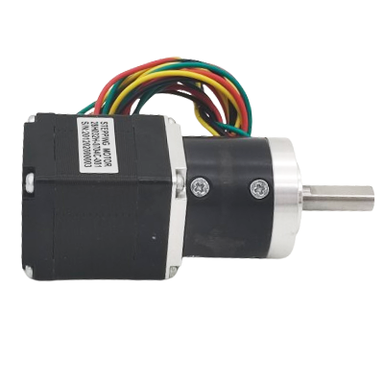
NEMA 11 Stepper Motor With 5.18:1 Ratio Planetary Gearbox
-

NEMA 17 Bipolar 0.9deg 0.29Nm (40.3oz.in) 42x42x39mm 4 Wi...
-

NEMA 23 Bipolar 1.8deg 0.52Nm(72.2oz.in) 2.8A 2V 57x57x41...
-

NEMA 24 Bipolar 1.8deg 2Nm (277.8oz.in) 2.8A 3.36V 60x60x...
-
40×40mm 50w 3000rpm 0.16Nm 24VDC Servo Motor
-
24V 3000RPM 0.096Nm 30W 2.0A Ф57x40mm Brushless DC Motor