

What Are The Speed Control Methods Of Brushless DC Motor?
Nov 22, 2023
Brushless DC motors have gained widespread popularity due to their efficiency, reliability, and versatility in various applications such as robotics, electric vehicles, and industrial automation. One critical aspect of maximizing the utility of BLDC motors is the ability to control their speed effectively. The speed control methods of brushless DC motors can be broadly categorized into open-loop and closed-loop control techniques. Here's an overview of some common methods.
I Open-Loop Control Methods:
1.Voltage Control:Basic speed control can be achieved by adjusting the applied voltage to the BLDC motor. However, this method may lack precision, especially under varying load conditions.
2.Pulse Width Modulation (PWM): PWM is a commonly used open-loop control technique. By modulating the width of the voltage pulses applied to the motor, the average voltage and, consequently, the speed can be controlled. This method is relatively simple and cost-effective.
3.Frequency Control: Similar to voltage control, adjusting the frequency of the input signal can impact the speed of the BLDC motor. This method is often used in conjunction with PWM to achieve the desired speed.
II Closed-Loop Control Methods:
1. Hall Effect Sensor-Based Control: Many BLDC motors incorporate Hall effect sensors that detect the rotor's position. Using this feedback, the control system can energize the motor's coils in the optimal sequence, providing smoother and more efficient control.
2. Sensorless Control: Sensorless control methods eliminate the need for Hall effect sensors. Techniques such as Back Electromotive Force (BEMF) sensing or observer-based control estimate the rotor position based on the motor's behavior, providing a cost-effective solution.
3. Field-Oriented Control (FOC): FOC, also known as vector control, is an advanced closed-loop method. It involves transforming the motor's three-phase currents into two components: torque-producing and magnetizing currents. FOC allows independent control of torque and flux, providing precise control of speed and torque.
4. Direct Torque Control (DTC): DTC is another closed-loop method that focuses on directly controlling torque and flux. It offers faster dynamic response and precise torque control compared to traditional methods.
5. Closed-Loop Speed Control with PID: Proportional-Integral-Derivative (PID) controllers are commonly used in closed-loop speed control systems. PID controllers continuously adjust the motor's operation based on feedback, maintaining accurate speed control and compensating for disturbances.
6. Adaptive Control: Adaptive control methods adjust control parameters based on the motor's operating conditions. These systems can optimize performance under varying loads and environmental factors.
Each method has its advantages and disadvantages, and the choice depends on the specific application requirements, cost considerations, and desired performance characteristics. As technology continues to advance, the development of more efficient and precise speed control methods for BLDC motors is likely to persist, driving innovation across various industries.
You Might Also Like
-

NEMA 17 Bipolar 1.8deg 0.4Nm 1.2A 2.8V 42x42x39mm Stepper...
-

24V 2000RPM 0.19Nm 40W 2.5A Ф57x50mm Brushless DC Motor
-

24V 4000RPM 0.048Nm 20W 2.0A Ф36x55mm Brushless DC Motor
-

AEP115 Series High Precision Planetary Gearbox
-

AEP090 Series High Precision Planetary Gearbox
-
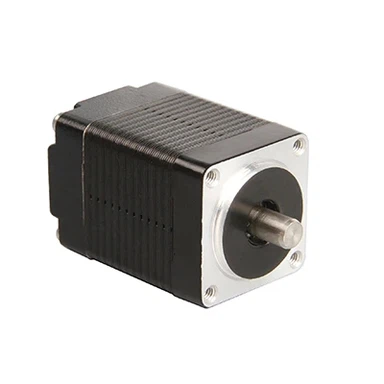
NEMA 8 Bipolar 1.8deg 0.013Nm(1.8oz.in) 0.2A 4.8V 20x20x2...