


Understanding Geared Stepper Motors: A Comprehensive Guide
Oct 21, 2024
In the realm of precision motion control, stepper motors have long been celebrated for their accuracy and reliability. Among the various types of stepper motors, geared stepper motors stand out for their unique ability to combine the benefits of stepping motion with the advantages of gear reduction. In this blog, we will explore what geared stepper motors are, how they work, their advantages, applications, and factors to consider when choosing one for your project.
What is a Geared Stepper Motor?
A geared stepper motor is essentially a stepper motor that incorporates a gearbox to enhance its performance. The stepper motor itself is an electromechanical device that converts electrical pulses into discrete mechanical movements, allowing for precise control of rotation. When a gearbox is added to this system, it modifies the motor's output characteristics, such as torque and speed.
Components of a Geared Stepper Motor
Stepper Motor: The heart of the system, the stepper motor converts electrical pulses into precise mechanical movement. It consists of a rotor, which rotates, and a stator, which generates magnetic fields to drive the rotor. The design allows for accurate positioning by moving in defined increments, or steps.
Gearbox: The gearbox is crucial for modifying the motor's output characteristics. It typically employs a planetary or harmonic design to reduce the speed of the motor while simultaneously increasing torque. This gear reduction allows the motor to perform effectively in applications requiring high torque at lower speeds.
Encoder (Optional): Many geared stepper motors feature an optional encoder that provides valuable feedback on the motor's position, speed, and direction. This information allows for closed-loop control, enhancing accuracy and responsiveness in applications where precise motion is essential.
Driver: The driver is an electronic component responsible for sending electrical pulses to the stepper motor, regulating its movement. It interprets commands from a control system and translates them into the appropriate signals to drive the motor. The driver plays a significant role in controlling speed, direction, and overall performance.
How Do Geared Stepper Motors Work?
The operation of a geared stepper motor combines the principles of both stepper motors and gear systems. Here's a breakdown of the process:
Stepper Motor Basics: Stepper motors operate by receiving electrical pulses that cause the rotor to move in fixed increments, or "steps." Each pulse corresponds to a specific angular movement, providing high precision in positioning.
Gear Mechanism: The addition of a gearbox involves a set of gears that connect the motor shaft to the output shaft. The gearbox can either increase torque or decrease speed, depending on its design. Common types of gear configurations include planetary gears, spur gears, and worm gears.
Torque and Speed: The gear ratio determines how the motor's output is affected. For example, a high gear ratio (more gears in the system) will amplify the torque at the expense of speed. Conversely, a low gear ratio will increase speed but reduce torque. This allows users to tailor the motor's performance to specific application requirements.
Advantages of Geared Stepper Motors
Geared stepper motors offer several benefits that make them an attractive choice for various applications:
Increased Torque: One of the primary advantages of geared stepper motors is their ability to provide higher torque at lower speeds. This is particularly beneficial in applications requiring strong holding forces or when starting from a standstill.
Improved Precision: The gear reduction allows for finer control of movement, enabling higher precision in applications where exact positioning is crucial.
Reduced Backlash: Many geared systems are designed to minimize backlash, improving the overall accuracy of positioning in applications where slight deviations can cause issues.
Versatility: Geared stepper motors can be used in various applications, from robotics to CNC machines, due to their ability to adapt to different torque and speed requirements.
Cost-Effectiveness: In many cases, using a geared stepper motor can be more cost-effective than using a more expensive motor with built-in high torque capabilities.
Applications of Geared Stepper Motors
Geared stepper motors are used in a wide range of industries and applications, including:
Robotics: In robotics, geared stepper motors provide the precision and torque needed for accurate movement and manipulation.
3D Printing: The additive manufacturing industry often employs geared stepper motors to ensure precise layer deposition and positioning.
CNC Machinery: In CNC machines, geared stepper motors enable accurate control of cutting tools and movements.
Medical Equipment: Geared stepper motors are used in various medical devices, such as surgical robots and imaging equipment, where precision is critical.
Textile Machinery: In the textile industry, these motors facilitate precise control over weaving and knitting machines.
Geared stepper motors are a versatile and powerful solution for achieving precise motion control in a variety of applications. Their ability to combine the advantages of stepper motors with gear reduction makes them suitable for tasks requiring high torque and accuracy. By understanding their principles of operation, benefits, and applications, engineers and designers can make informed choices that enhance their projects. As technology continues to advance, geared stepper motors will undoubtedly play a crucial role in the evolution of automation and robotics, providing the precision and control needed for future innovations.
You Might Also Like
-

NEMA 17 Bipolar 1.8deg 0.45Nm 2A 2.6V 42x42x39mm 4Wire St...
-

NEMA 16 Bipolar 0.9deg 0.12Nm (16.7oz.in) 0.6A 6V 39x39x2...
-
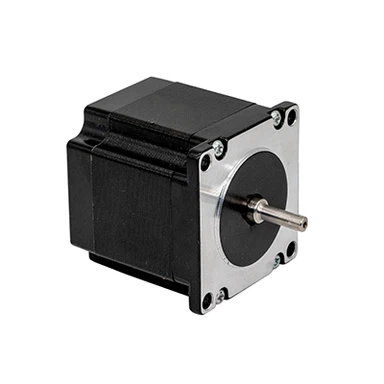
NEMA 23 Unipolar 1.8deg 0.39Nm (54oz.in) 57x57x41mm 6 Wir...
-
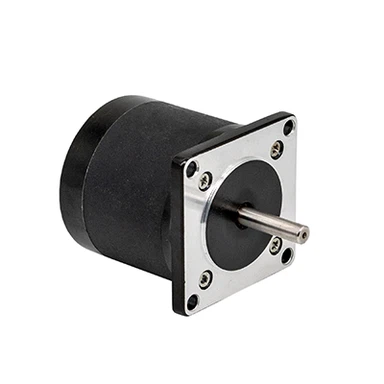
Round NEMA 23 Bipolar 1.8deg 0.36Nm (50oz.in) 0.5A 9.9V Ф...
-

24V 3500RPM 0.136Nm 50W 3.4A Ф57x44mm Brushless DC Motor
-
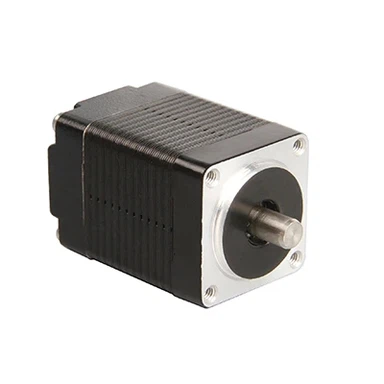
NEMA 8 Bipolar 1.8deg 0.013Nm(1.8oz.in) 0.2A 4.8V 20x20x2...