


What Are The Common Type Of Motors in A CNC Machine?
Nov 27, 2023
When we look at a CNC machine, we will notice that on any CNC machine, there are several motors that offer power to the machine. These motors’ type and size have a big impact on the speed, precision, and accuracy of the CNC machine. So what these motors commonly are? They are the stepper motors and servo motors.

Today, we will look into how stepper motor and servo motor work in a CNC machine and their pros and cons in CNC machine from the perspective of cost, energy efficiency, maintenance and longevity, speed, precision, and accuracy, which can help our clients choose the most suitable type of motors for their CNC machines.
How Does the Stepper Motor Work in a CNC Machine?
Stepper motors play a crucial role in CNC machines by converting electrical pulses into precise mechanical movements. Operating on the principle of moving in discrete steps, these motors receive signals from the CNC controller, translating each pulse into a fixed angular rotation. This step-wise motion allows for meticulous control over the position of the cutting tools and workpieces.
The motor's rotor moves incrementally, aligning with the magnetic fields generated by the stator. Unlike traditional motors, stepper motors do not rely on continuous rotation, providing an advantage in applications that demand exact positioning. This inherent precision makes stepper motors ideal for CNC tasks, ensuring that every movement is executed with accuracy, and contributing to the overall efficiency and reliability of the machining process.
How Does the Stepper Motor Work in a CNC Machine?
In a CNC machine, a servo motor operates with a closed-loop control system, continuously receiving feedback from an encoder. The CNC controller monitors the motor's actual position and compares it to the desired position. If a deviation is detected, the controller adjusts the voltage supplied to the servo motor, ensuring it reaches and maintains the correct position.
This real-time feedback mechanism enables servo motors to deliver precise and dynamic movements with high speed and accuracy. The constant adjustments make servo motors ideal for applications requiring rapid changes in speed and direction, contributing to the overall efficiency and precision of the CNC machining process.
Compare Stepper Motor and Servo Motor in CNC Machine
1. Cost: Stepper motors generally have a cost advantage, being more budget-friendly compared to servo motors. The simplicity of their design and open-loop control system contributes to lower initial investment, making stepper motors a suitable choice for applications where cost is a significant concern
2. Energy Efficiency: Compared with stepper motors, servo motors have less power consumption. Servo motors are known for their energy efficiency, especially during periods of inactivity. Meanwhile, The closed-loop control allows for optimized power consumption. While stepper motors consume a lot of power when holding position, this constant power consumption may result in higher energy costs over time.
3. Maintenance and Longevity: Stepper motors, with their simpler design, typically require less complex maintenance. While they may experience wear on components like the rotor, their durability can contribute to a longer service life. In contrast, servo motors involve more intricate maintenance due to the closed-loop system and reliance on feedback devices. However, their complexity is often justified by the potential for a longer lifespan with proper care.
4. Speed: Stepper motors are suitable for applications with moderate speed requirements. However, they may struggle with high-speed and dynamic tasks, impacting overall speed capabilities. Servo motors, on the other hand, excel in high-speed applications and dynamic tasks, providing swift acceleration, deceleration, and precise control over speed. If you have higher requirement for speed, servo motor can be your choice.
5. Precision and Accuracy: Servo motors offer greater precision and accuracy than stepper motors. Servo motors operate in a closed-loop system with continuous feedback, ensuring unrivaled precision and accuracy. Its dynamic responsiveness and real-time adjustability make it the preferred choice for applications where accuracy is critical.
Conclusion
The choice between stepper and servo motors in CNC machines involves a trade-off between cost, energy efficiency, maintenance, speed, and precision based on the specific requirements of the application. Stepper motors are cost-effective and have less maintenance, while servo motors excel in dynamic performance, precision, and energy efficiency but come at a higher initial cost. The selection should align with the priorities of the CNC application and overall system requirements.
You Might Also Like
-

Round NEMA 14 Bipolar 0.9deg 0.056Nm (7.78oz.in) 0.4A 4.8...
-

Round NEMA 23 Bipolar 1.8deg 0.40Nm (56oz.in) 1.56A 11V Ф...
-
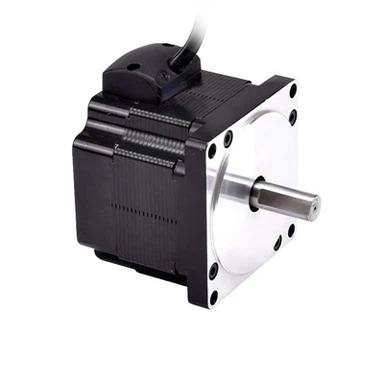
48V 4000RPM 0.24Nm 100W 2.43A 80x80x50mm Brushless DC Motor
-

48V 4000RPM 0.48Nm 200W 5.06A 80x80x67mm Brushless DC Motor
-

Round NEMA 23 Bipolar 1.8deg 0.84Nm (117oz.in) 2.55A 2.8V...
-
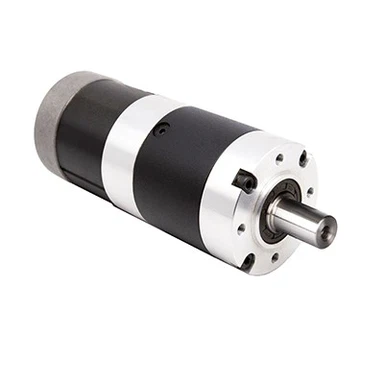
57mm Geared Brushless DC Motor