

What Are The Advantages Of A Hybrid Stepper Motor
Nov 24, 2023
Hybrid stepper motors have gained widespread popularity in various industrial and commercial applications due to their unique design that combines the features of both permanent magnet (PM) and variable reluctance (VR) stepper motors. This hybrid configuration offers numerous advantages, making hybrid stepper motors a preferred choice in situations where precise control, reliability, and cost-effectiveness are paramount.
High Precision and Resolution: Hybrid stepper motors provide high precision in positioning, making them suitable for applications that demand accurate control over the motor's rotational position. With a typical step resolution of 200 steps per revolution, hybrid stepper motors can achieve fine granularity in motion control. Additionally, microstepping technology allows for even finer resolution, enabling smoother and more precise movements.
Versatility in Sizes and Configurations: Hybrid stepper motors are available in a wide range of sizes and configurations. This versatility allows engineers and designers to select a motor that precisely meets the torque, speed, and physical size requirements of their specific application. Whether it's a small, compact motor for a medical device or a larger motor for industrial machinery, hybrid stepper motors can be tailored to fit diverse needs.
Excellent Torque-to-Inertia Ratio: The design of hybrid stepper motors results in a favorable torque-to-inertia ratio. This characteristic is crucial for applications that demand rapid acceleration and deceleration. The efficient torque delivery and low rotor inertia contribute to the motor's ability to respond quickly to changes in input commands.
High Holding Torque: Hybrid stepper motors exhibit high holding torque, which is the torque the motor can generate to resist external forces when stationary. This is particularly beneficial in applications where maintaining a specific position without power is essential, such as holding a load in place or preventing unwanted motion in the absence of power.
Smooth Operation with Microstepping: Hybrid stepper motors can operate smoothly, thanks to microstepping technology. Microstepping subdivides each full step into smaller increments, reducing the traditional "cogging" effect associated with stepper motors. The result is a smoother motion profile, reduced vibration, and quieter operation, making hybrid stepper motors suitable for applications where noise and resonance are concerns.
Adaptability to Digital Control Systems: Hybrid stepper motors are well-suited for integration with digital control systems. They can be easily interfaced with microcontrollers and other digital devices, enabling precise and responsive control. This adaptability is essential in applications where synchronization with other digital systems is required for seamless operation.
Low Maintenance Requirements: Hybrid stepper motors are known for their reliability and durability, contributing to low maintenance requirements. The absence of brushes and commutators, common components in other types of motors, reduces wear and tear, resulting in longer service life and increased overall system reliability.
Cost-Effective Solution: Hybrid stepper motors offer a cost-effective solution for many applications. Their relative simplicity in design and ease of manufacturing contribute to lower production costs. Additionally, the straightforward control systems required for these motors can lead to cost savings in the overall system.
Wide Range of Operating Temperatures: Hybrid stepper motors can operate in a wide range of temperatures, making them suitable for diverse environmental conditions. This adaptability is crucial in applications where the motor is exposed to varying temperatures, such as in outdoor settings or industrial environments with fluctuating ambient temperatures.
Ease of Integration: Integrating hybrid stepper motors into existing systems is relatively straightforward. They do not require complex control algorithms, and their compatibility with various drive electronics simplifies the integration process. This ease of integration can be a significant advantage in reducing development time and costs.
In conclusion, the advantages of hybrid stepper motors, including high precision, versatility, excellent torque-to-inertia ratio, holding torque, smooth operation with microstepping, adaptability to digital control systems, low maintenance requirements, cost-effectiveness, wide operating temperature range, and ease of integration, make them a preferred choice in numerous applications across industries. As technology continues to advance, hybrid stepper motors are likely to play an increasingly vital role in meeting the evolving demands of motion control systems.
You Might Also Like
-

NEMA 17 Bipolar 1.8deg 0.38Nm (52.8oz.in) 1.68A 2.8V 42x4...
-
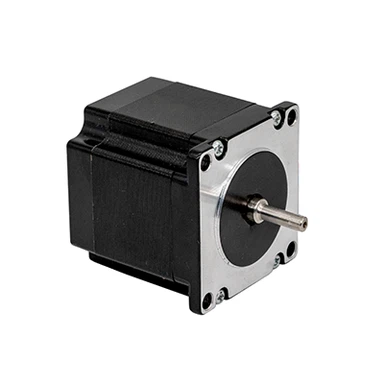
NEMA 23 Bipolar 1.8deg 0.85Nm(118oz.in) 2.8A 2.3V 57x57x5...
-

NEMA 24 Bipolar 1.8deg 2.5Nm (347oz.in) 3A 2.1V 60x60x86m...
-

24V 5000RPM 0.029Nm 15W 0.98A Ф36x50mm Brushless DC Motor
-

80x80mm 1000w 3000rpm 3.18Nm 48VDC Servo Motor
-

180x180mm 5500w 1500rpm 35Nm 33.9VAC/48VDC Servo Motor