
What Is The NEMA 11 Stepper Motor
Dec 11, 2023
The NEMA 11 stepper motor is a specific type of stepper motor that adheres to the standards set by the National Electrical Manufacturers Association (NEMA). Due to their compact size and high-precision features, they find applications in various fields requiring precise control and limited space. In this blog, we will take a look at the NEMA 11's specifications, dimensions, and applications in SIT.
1 NEMA 11 Stepper Motor Specification
1. 1 Holding Torque
Holding torque is a crucial specification for applications that require the motor to hold a position without external power. The NEMA 11 stepper motors in SIT have a wide range of torque ratings, rated at 5.6 oz-in, 8.8 oz-in, 9.4 oz-in, 11.8 oz-in, 13.2 oz-in, and 16.7 oz-in, which can fit for different torque requirements.
1.2 Rated Voltage and Current
SIT provides six voltage choices for the NEMA 11 stepper motor, which are 3.75V, 4.56V, 6.2V, 2.66V, 2.85V, 4.4V. And their current are rated at 0.67A and 0.95A. When selecting a stepper motor driver, it's essential to ensure that the driver can supply the required current and voltage to the motor without exceeding its rated specifications.
1.3 Frame size and Body length
The NEMA 11 stepper motors have a frame size of 28 mm x 28 mm. Ans there are three standard body length NEMA 11 stepper motors for clients to choose from, which are 32mm, 45mm, and 50mm.
1.4 Step Angle and Resolution
The step angle of a stepper motor is a crucial parameter that defines the angular displacement produced by each step of the motor. For NEMA 11 stepper motors, its standard step angle is typically 1.8 degrees per step.
1.5 Coil Configuration
NEMA 11 stepper motors in SIT are available in bipolar and unipolar designs. The choice between bipolar and unipolar configurations depends on the specific application requirements, considering factors such as torque, precision, and ease of control. Bipolar configurations are often chosen for applications where higher torque is essential, while unipolar configurations may be preferred for their simplicity in control systems.
2 NEMA 11 Stepper Motor Dimension

3 NEMA 11 Stepper Motor Applications
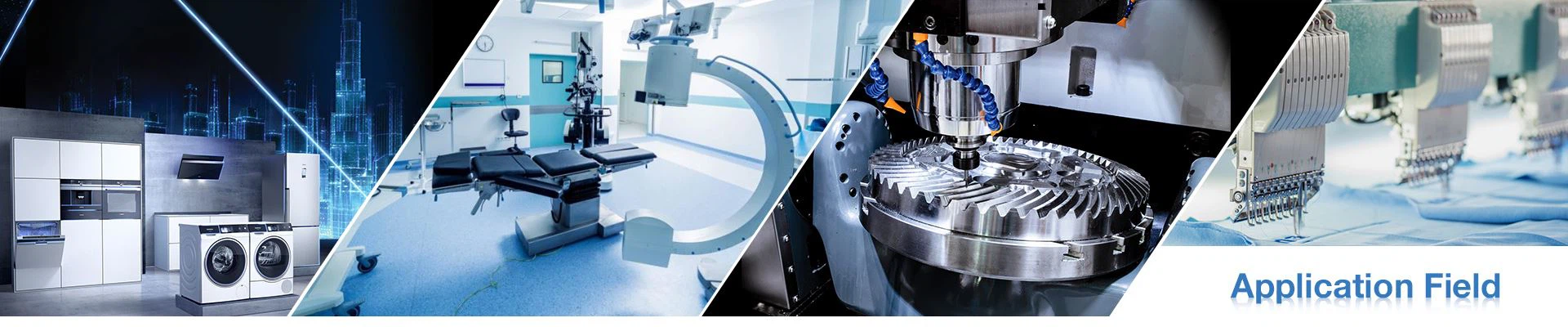
NEMA 11 stepper motors have many applications due to their compact size and precise control capabilities. They are commonly used in textile machines, medical equipment, optical instruments, etc.
3.1 Textile Machinery
NEMA 11 stepper motors play a key role in textile machinery, largely due to their compact design and highly controllable motion characteristics. Their small size allows NEMA 11 motors to easily fit into the limited space of textile machinery, providing greater flexibility for a variety of applications. In textile production, NEMA 11 stepper motors are used for precise yarn transport and fabric positioning, ensuring accurate tension control and precise creation of complex patterns. Their high-precision stepper motion provides superior performance for textile machinery, increasing productivity and product quality.

3.2 Medical Equipment
The use of NEMA 11 stepper motors in medical device applications stems from their reliability and highly controllable motion characteristics. NEMA 11 motors are used to achieve precise motion control in medical device manufacturing, especially in precision instruments and positioning systems. Their small design allows them to fit into the limited space of medical equipment, and by integrating them with the appropriate control system, NEMA 11 stepper motors can provide reliable motion control for highly complex medical applications such as surgical robots, imaging equipment and laboratory instruments.

3.3 Optical Instruments
NEMA 11 stepper motors are widely used in optical instrumentation because of their high precision and flexibility. Optical instruments often require extremely precise motion control to ensure accurate positioning and stability of the optical path, and NEMA 11 motors provide excellent positioning of the optical elements through their high-precision stepping motion, offering an ideal solution for focus and orientation adjustments in telescopes, microscopes and other optical instruments. Their small size allows them to be easily embedded in instruments with limited space, while their reliable performance ensures a high degree of precision in optical instruments.

You Might Also Like
-

NEMA 8 Bipolar 1.8deg 0.018Nm(2.5oz.in) 0.6A 3.6V 20x20x3...
-

48V 4000RPM 0.144Nm 60W 1.63A 42x42x70mm Brushless DC Motor
-

NEMA 17 Unipolar 0.9deg 0.29Nm (40.3oz.in) 1.2A 4V 42x42x...
-

60x60mm 200w 3000rpm 0.64Nm 220VAC Servo Motor
-

310V 4000RPM 0.48Nm 200W 1.83A 80x80x67mm Brushless DC Motor
-

180x180mm 2900w 1500rpm 18.5Nm 380VAC Servo Motor